Dig Collect Getting Started Guide
Learn Dig & Collect’s sand-path loop and clear your first levels with confidence.
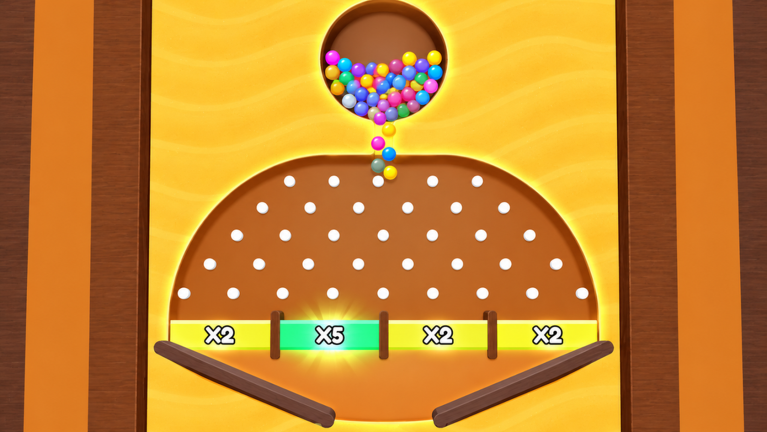
Dig & Collect (often shortened to Dig Collect on this wiki) is a Roblox Party & Casual minigame by Collect Ball Game. You dig through sand, create paths, and guide colorful balls to the finish while avoiding obstacles and traps. Sessions are single-player, so you can reset freely and learn at your own pace. This getting-started guide covers how the game works on day one, what early levels teach, dig-path basics, and what to unlock or practice next.
What you are trying to do
Each stage presents sand, balls, a finish target, and hazards. Your job is to remove sand so gravity can carry balls along a route you design. Digging is the verb; routing is the skill. A level that looks “solved” with one lucky ball often still has stranded balls on flat shelves or balls that fell into traps. More balls collected is better, so treat early clears as drafts and replays as the real practice.
Dig Collect launched on Roblox around 2026-10-22 and runs through the Roblox client on PC, mobile, and console. You do not need a separate download beyond Roblox itself. Open the experience from the official Dig & Collect place, complete any short intro prompts, and jump into the first unlocked stages.
First session checklist
- Confirm you can dig smoothly—see the dedicated Controls page for PC mouse drag, mobile touch drag, and console pointers.
- Clear level 1 by making a simple downhill channel from ball to finish. Do not over-dig the whole map.
- Replay the same level and try to land every ball you see. Note where flats stop motion.
- On the next few levels, pause before digging and spot traps, walls, and the finish location.
- After a handful of clears, skim Path Digging so slopes and shelves become intentional tools.
How Dig Collect “feels” when it clicks
Good digs are continuous enough that balls keep rolling, but not so wide that balls bounce sideways into spikes or fall off intended ledges. Think of sand as temporary scaffolding: leave shelves when you need to hold a ball, carve slopes when you need speed, and keep walls thick enough that a ball cannot clip into a hazard. If a ball freezes on a flat, that is physics working as designed—either dig a slope under it or accept that you parked it on purpose.
Bad digs usually come from two habits: carving a vertical shaft straight under every ball, or removing all sand before watching a single ball move. Vertical shafts create uncontrolled drops. Full-map excavation removes the flats and supports you might still need for sequencing. Dig a short test path, release or observe one ball, then extend.
Early level goals
Tutorial and early stages teach three lessons. First, balls prefer downhill motion—gentle slopes beat jagged stairs that create tiny flats. Second, hazards punish careless width; a neat corridor is safer than a crater. Third, multiple balls share the same sand, so the order you open routes matters. If two balls can collide or race into the same choke point, dig a holding shelf for one while the other finishes, then open the shelf. That idea expands fully in Save All Balls.
Do not chase perfection on every first attempt. Learn hazard silhouettes: spikes, rotating dangers, blocking planks, or narrow pipes near the finish. Once you can name why a run failed, you can fix that failure on the next reset instead of randomly redrawing the whole tunnel.
Dig path basics (starter version)
- Slope to move, flat to stop. Use slopes to feed the finish; use flats as brakes or holding pads.
- Work near the goal first when space is tight. A clean exit corridor prevents last-second deaths after a long successful roll.
- Keep paths a bit wider than the ball, but not stadium-wide. Excess width invites side bounce into traps.
- Reset early. If a ball is doomed, reset before you dig the rest of the map around a failed layout.
- One change per retry. Alter the choke that failed instead of redrawing everything.
When you want the deep physics version—multi-ball routing, shared channels, and advanced shelf tricks—open Path Digging. When late stages stack traps and awkward angles, jump to Hard Levels.
What to unlock or practice next
Progression in Dig Collect is level-forward: clear stages to open harder layouts. Your “unlocks” as a player are skills more than items. After the first session, prioritize:
- Comfortable dig precision on your device (Controls)
- Intentional slopes and holding flats (Path Digging)
- Full-ball clears on early maps (Save All Balls)
- Pattern recognition for nasty obstacle sets (Hard Levels)
Also check the Codes Hub for any active promo rewards that speed cosmetics or extras, and skim the Tier List Hub when you want a ranked view of approaches or stage priorities. Guides teach execution; codes and tier pages cover rewards and rankings.
Platform notes for day one
On PC, mouse drag usually gives the finest tunnel edges—great for narrow exits. On mobile, use slower strokes and slightly wider corridors until your touch accuracy improves. On console via Roblox, treat the dig cursor like a careful paintbrush; small corrections beat large sweeps. Dig Collect’s single-player design means nobody is waiting on you—take the time to redraw a corner.
A simple practice plan for the first hour
Spend ten minutes on controls only: dig straight lines, curves, and a shelf that can hold a ball. Spend twenty minutes clearing early levels once each. Spend the rest of the hour replaying those levels for every ball. Write a mental note after each fail: trap, flat stop, or bad slope. That note becomes your next dig goal.
Mindset that scales
Dig Collect rewards calm planning more than frantic scraping. The satisfying runs are the ones where you already knew where each ball would pause and where it would commit to the finish. Use this getting-started page as your orientation, then live in the sibling guides as stages get denser. When you return after a break, re-read the dig path basics above and warm up on an easy unlocked level before tackling a hard one.
You now know the loop: dig sand, respect gravity, avoid traps, collect as many balls as you can, and reset without ego. Head to Controls if inputs still feel fuzzy, or skip ahead to Path Digging if you are ready to design tunnels on purpose.
Frequently Asked Questions
Quick answers for Dig Collect players.
What is Dig Collect in one sentence?
Dig & Collect is a single-player Roblox sand-path puzzle where you dig tunnels to guide colorful balls to the finish while avoiding traps—more balls collected is better.
Do I need friends to play?
No. The experience is single-player (maxPlayers=1). You can dig, reset, and retry alone on PC, mobile, or console through Roblox.
Why did my ball stop moving?
Balls stop on flat sand shelves. Dig a slope under the ball or connect a downhill path toward the finish. See Path Digging for details.
What should I read after this guide?
Controls for input precision, then Path Digging and Save All Balls. Use Hard Levels when later stages feel unfair, and check Codes for promos.
Who made Dig & Collect?
Collect Ball Game created Dig & Collect on Roblox (released around 2026-10-22). This wiki covers strategies for that experience.